


How to Pack a Storage Unit the Right Way in Texas | Yellow Door Storage
Packing a storage unit sounds straightforward until you open it three months later and find your couch has a mold spot, your boxes collapsed under each other, and the lamp you needed last week is buried somewhere behind a dresser with no clear path to reach it. It happens more than people expect, and almost all of it is avoidable.
Texas storage has its own set of rules. The heat alone changes how you need to think about materials, what you wrap things in, and how you seal boxes. Add the humidity swings between seasons and you've got a combination that's harder on stored belongings than most people plan for.
Here's how to do it right.
Start With a Layout Plan Before Anything Goes In
This is the step almost everyone skips and almost everyone regrets. Once your unit is half loaded, rearranging means unloading half of it. Spend ten minutes thinking through the layout before the first box touches the floor.
Heavy furniture goes against the walls and toward the back. Appliances and large items anchor the space. Boxes and lighter things stack on top of furniture where you can. That's space that would otherwise go to waste.
Most storage units have eight to ten foot ceilings and people use maybe five of them. Get shelving if you can. A basic metal shelving unit from any hardware store dramatically changes how much fits and how easy it is to find things.
Most importantly, leave a center aisle. A path down the middle of the unit means you can reach things toward the back without dismantling the front. It feels like wasted space when you're loading. It saves hours of frustration every time you come back.
Put things you'll need access to near the door. Seasonal stuff you won't touch until December belongs in the back. The box of things you might need next month belongs in the front.
Boxes Matter More Than People Think
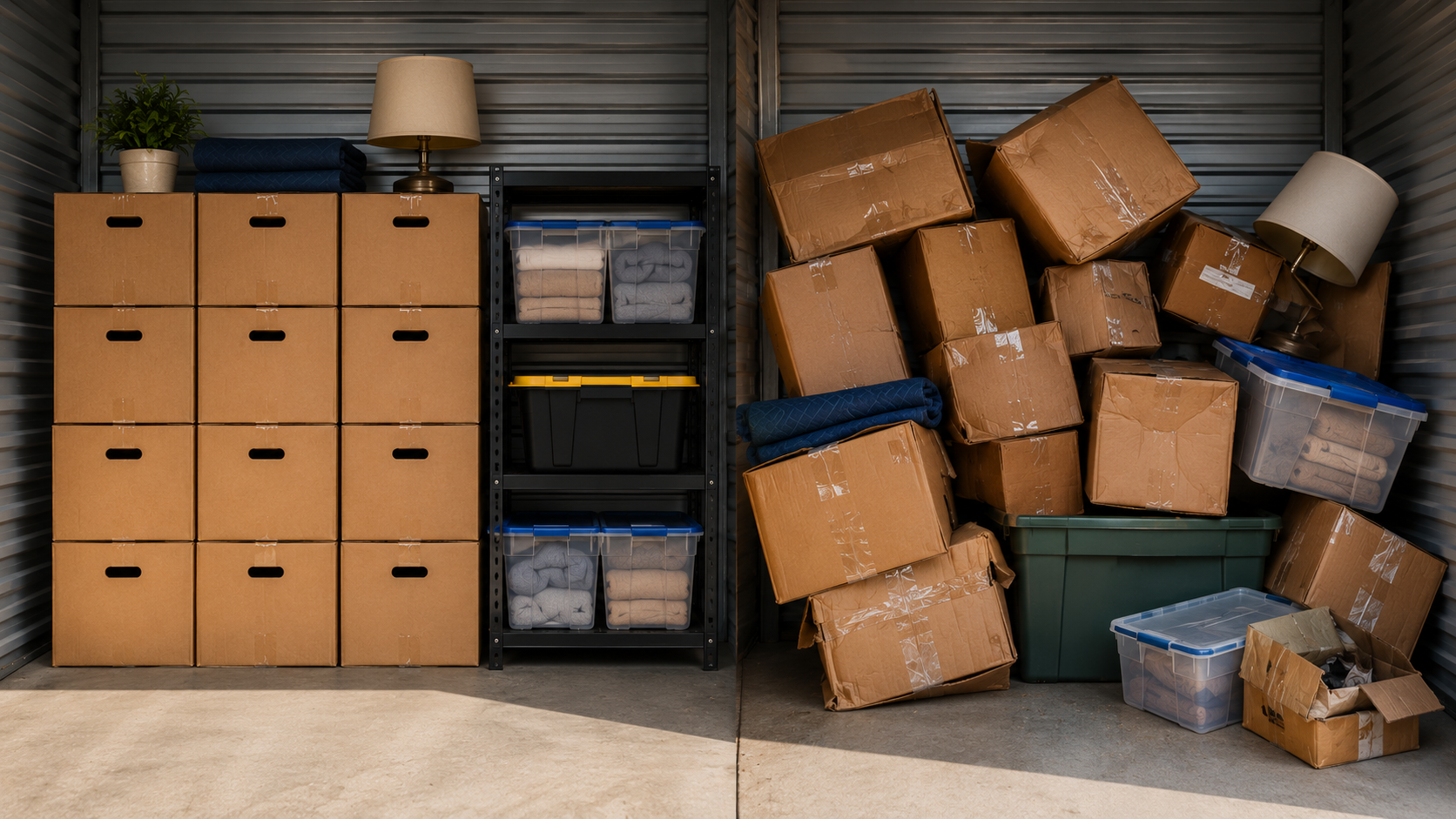
Not all boxes are the same and the difference shows up fast when they're stacked five high in a Texas storage unit.
Use Uniform Box Sizes
Uniform box sizes are the single biggest thing you can do for stability. Standard moving boxes, small, medium, large, stack cleanly because the edges line up. Mixed sizes create uneven weight distribution and the columns tip. Use one size per stack wherever possible.
Put Heavy Items in Small Boxes
Heavy things go in small boxes. This sounds counterintuitive but it's the rule that prevents the most damage. Books, tools, dishes, anything dense, small box only. A large box of books will buckle at the bottom before you even get it off the truck. A small box of the same books is manageable and stackable.
Fill Boxes Completely
Fill every box completely to the top. A half-full box collapses under the weight of whatever sits on it. If the contents don't fill the space, use packing paper, bubble wrap, old towels, or clothing to top it off. The box should feel solid when you press the top. No give.
Label Every Side
Label every side and the top. You'll push boxes against walls. Labels on one side become invisible. Write the room, a few key contents, and whether anything is fragile, on every face of the box.
How Texas Heat Changes the Way You Pack
In most states you could pack a storage unit casually and things would be fine. In Texas the heat creates specific problems that casual packing doesn't account for.
Avoid Plastic Wrap on Upholstered Furniture
Plastic wrap directly on upholstered furniture is a mistake in this climate. It traps moisture underneath and in a unit that cycles between Texas summer heat and cooler months, that moisture turns into mildew on fabric faster than you'd expect. Use moving blankets or furniture covers that breathe instead. Cover the furniture, protect it from dust and scratches, but let it breathe.
Store Mattresses Vertically
Mattresses need to stand on their sides. Flat storage causes moisture to accumulate on the bottom face and the internal structure sags over time. Vertical storage keeps the shape intact and allows air to circulate.
Protect Wood Furniture Before Storage
Anything made of wood should be treated before storage if you're leaving it for more than a month or two. A light coat of furniture polish or wood conditioner before loading protects against the drying effect of heat. It takes ten minutes and makes a real difference on pieces you care about.
Use Quality Packing Tape
Seal cardboard boxes tightly with quality tape, not the thin stuff that peels in heat. Cheap tape fails in high temperatures and boxes that seemed sealed when you loaded them are open by summer.
Wrap Furniture Corners and Legs
Wrap wood furniture legs and corners in cardboard or moving blankets. Even in a secure facility things shift during loading, shift again when neighboring units are accessed, and corners take the damage.
The Humidity Problem
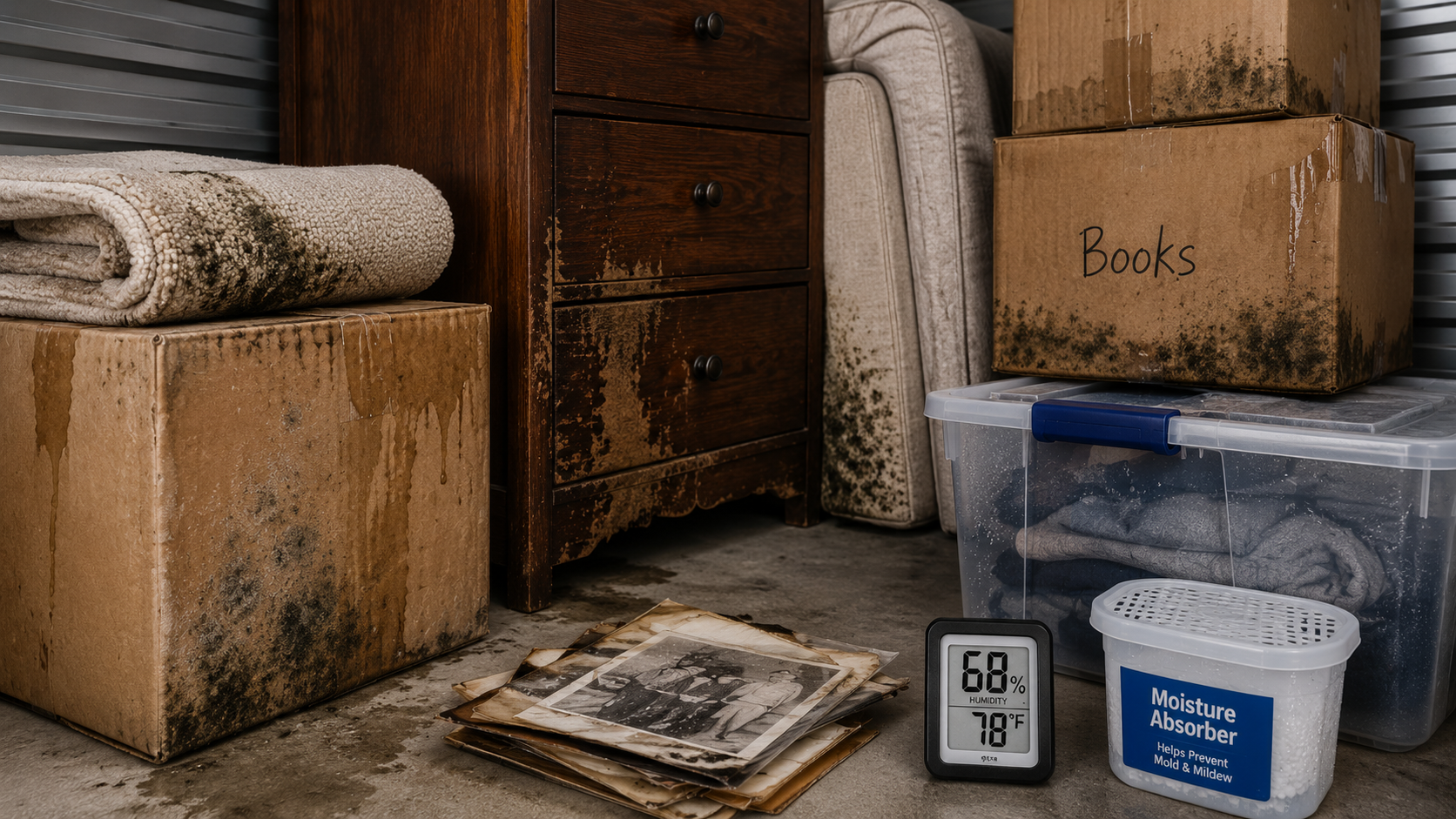
This Is the One That Catches People Off Guard
Most people focus on summer heat and stop there. Humidity is the part that quietly ruins things they didn't expect.
North Texas doesn't just get hot. It cycles hard between dry summers, humid springs, and cold fronts that swing the temperature dramatically in a single day. That cycling pushes moisture into anything porous and pulls it back out repeatedly. Wood expands and contracts. Fabric absorbs and releases. Over months, that movement does structural damage that wasn't visible when things went in.
Never Store Damp Items
Never store anything wet or even slightly damp. It sounds obvious but it's the most common mistake. A rug that felt dry but wasn't quite. A piece of patio furniture that sat in morning dew. A box packed in a humid garage. Anything with moisture in it when it goes in the unit will have mold in it when it comes out. Let everything dry completely, ideally in the sun for a few hours, before loading.
Use Silica Gel Packs
Put a silica gel desiccant packet inside any box containing documents, photos, electronics, clothing, or instruments. They're cheap, they last months, and they absorb excess moisture before it can do damage. Toss two in larger boxes.
Keep Items Off the Floor
Don't place boxes or furniture directly on the concrete floor. Concrete wicks moisture. Use wooden pallets, plastic sheeting, or at minimum a layer of cardboard between your belongings and the floor. This matters especially in non-climate units where the floor temperature fluctuates with the outside air.
Furniture Storage Tips That Prevent Damage
Disassemble Furniture When Possible
Disassemble everything you can. Table legs, bed frames, shelving units, desks with removable tops. Breaking these down reduces the space they take and eliminates the leverage that causes damage during transport and shifting.
Keep all hardware in labeled zip-lock bags taped directly to the piece they belong to. Don't put hardware bags in a separate box. You will not find them when you need them.
Store Glass Vertically
Glass table tops and mirrors need to stand vertical, never flat. Flat storage puts pressure across the entire surface and a single settling shift can crack them. Stand them on edge, wrapped, with something soft between them and any wall.
Store Sofas Correctly
Sofas can usually be stored on their ends if you need the floor space. Check the frame first. Some sofas have a solid wood structure that handles it fine, others don't. If you're not sure, leave it flat and stack lighter items on top.
Cover Furniture Properly
Wrap everything with fabric or blankets before anything goes in. Corners chip, surfaces scratch, and the finish on a piece of furniture that looked perfect when it went in can look very different after months of contact with cardboard.
The Climate Control Decision
If you're storing wood furniture, upholstered pieces, electronics, clothing, instruments, artwork, documents, or photos, get the climate controlled unit. In Texas, the heat and humidity combination is genuinely hard on all of those things in ways that show up months later when you're unpacking.
If you're storing outdoor furniture, metal tools, lawn equipment, or anything that already lives outside and handles weather, standard is fine.
The packing tips above apply in both cases, but climate control removes the biggest variable. You're not fighting the Texas summer from inside the unit. The temperature and humidity are managed for you.
One Last Thing
Take photos before you close the door for the first time. Photo every wall, the full unit from the entrance, and close-ups of any high-value items. If you ever need to make an insurance claim you'll want documentation of what was in there and what condition it was in. It takes two minutes and most people only think of it after they need it.
Yellow Door Storage Locations
Yellow Door Storage in Lantana is at 2001 E. Hickory Hill Rd, Argyle, TX 76226. In Van Alstyne at 705 Co Rd 375.
Both locations offer climate controlled units, drive-up access, and online rental. Check availability and reserve at yellowdoorstorage.com.